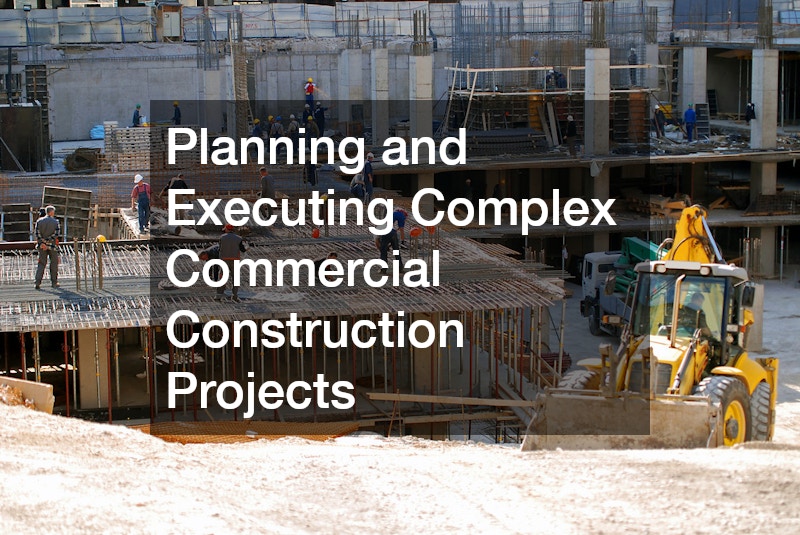
Complex commercial construction projects require far more than building expertise alone. They demand careful coordination between multiple teams, precise scheduling, regulatory awareness, and strong leadership from start to finish. Whether developing a large industrial facility, a retail center, or a multi-use commercial space, success depends on how well the entire process is planned and executed before the first shovel hits the ground.
Every phase of a project is interconnected. A delay in early site preparation can cascade into structural setbacks. Poor communication between subcontractors can lead to costly rework. On the other hand, well-structured planning improves safety outcomes, keeps budgets under control, and ensures the finished facility performs as intended for decades.
The following sections break down key phases of complex construction projects and provide actionable strategies to help teams manage them effectively from initial planning through final site completion.
Establishing Leadership and Project Direction

Strong leadership and coordination are the backbone of any large-scale build, and in complex commercial projects, this importance increases significantly due to the number of moving parts involved. Before construction begins, project stakeholders must align on goals, responsibilities, and execution strategies to prevent confusion later in the process, especially when multiple trades begin overlapping on-site activities.
A structured leadership framework helps ensure accountability and reduces delays caused by miscommunication. At this stage, defining the chain of command and workflow expectations is essential, including who has final authority over design adjustments, schedule changes, safety enforcement, and budget approvals. Without this clarity, even small decisions can become bottlenecks that slow down the entire project.
When working with a general contractor, it is important to evaluate not just pricing but also their ability to manage multiple subcontractors, handle regulatory requirements, and maintain consistent communication across teams. A strong general contractor acts as the central hub for execution, ensuring every phase progresses according to plan. This includes coordinating labor schedules, resolving conflicts between trades, and ensuring that inspections and permitting processes are completed on time. Their ability to anticipate issues before they escalate often determines whether a project stays on schedule or experiences cascading delays.
At the same time, commercial construction management systems should be implemented to oversee scheduling, budgeting, documentation, and coordination. These systems help project owners and managers track real-time progress and make informed decisions quickly. Modern platforms often integrate scheduling software, cost tracking dashboards, and field reporting tools, allowing teams to identify inefficiencies early and adjust workflows accordingly. This level of visibility is especially important in large projects where multiple subcontractors are working simultaneously across different phases.
Key actionable steps include:
- Establish a detailed project execution plan before mobilization so all stakeholders understand sequencing, dependencies, and deliverables from day one
- Define roles and responsibilities for all stakeholders to eliminate overlap, confusion, and gaps in accountability across teams.
- Set up a centralized communication system for updates and reporting to ensure that all changes, approvals, and issues are documented and accessible in real time.e
- Require weekly progress meetings with documented action items to maintain accountability and ensure unresolved issues are actively tracked to completion.
- Implement milestone-based tracking to monitor cost and schedule performance so deviations can be identified early and corrective action can be taken before delays escalate.e
- Create contingency plans for delays, labor shortages, or supply chain disruptions to maintain project momentum even when unforeseen challenges arise.
Clear leadership structures at this stage reduce friction later and ensure all teams are working toward the same outcome, particularly when the project transitions into high-intensity construction phases where coordination demands become significantly more complex.
Preparing and Clearing the Project Site
Before construction can move forward, the site must be properly evaluated and prepared, and this early phase often determines how smoothly the rest of the project will proceed. A thorough approach at this stage reduces uncertainty later, especially when dealing with complex builds where multiple trades and heavy equipment will be operating in tight coordination.
Initial site assessments should identify structural obstacles, soil conditions, environmental risks, and access limitations. These evaluations go beyond a basic visual inspection and often include subsurface investigations, drainage mapping, and traffic flow analysis for construction vehicles. Proper preparation helps avoid unexpected delays during construction by ensuring that hidden issues—such as unstable soil pockets, buried debris, or contaminated zones—are addressed before work begins.
A demolition contractor plays a critical role when existing structures need to be removed. Their expertise ensures that demolition is performed safely, efficiently, and in compliance with environmental regulations. This includes planning controlled tear-down sequences, managing dust and noise mitigation, and ensuring surrounding structures are protected from vibration or accidental impact. Poor demolition planning can lead to structural hazards, debris management issues, and schedule disruptions, especially when unexpected materials or structural reinforcements are encountered during removal.
Modern commercial construction projects require demolition work to be tightly integrated into the broader schedule so that site clearing transitions seamlessly into excavation and foundation work. This means demolition is not treated as an isolated task but as a coordinated phase that directly feeds into grading, utility planning, and structural layout preparation. When sequencing is properly aligned, equipment mobilization becomes more efficient, and idle time between phases is significantly reduced.
Actionable strategies for this phase include:
- Conduct geotechnical and environmental surveys before final design to ensure foundational planning is based on accurate soil composition and site conditions
- Coordinate demolition sequencing to align with excavation needs so that cleared areas are immediately ready for grading and foundation preparation.
- Ensure hazardous materials are identified and properly disposed of to maintain compliance and prevent contamination or safety risks on site.
- Establish controlled site access points for equipment and personnel to improve traffic flow, reduce congestion, and enhance safety management.
- Plan temporary drainage and erosion control systems to prevent water accumulation and soil displacement during active construction phases.
- Verify utility disconnections before demolition begins to eliminate risks associated with live electrical, gas, or water lines.
Commercial construction projects also benefit from early coordination with future build requirements during site prep. This includes anticipating foundation loads, equipment staging areas, and access pathways so that the cleared site supports not only immediate construction needs but also long-term operational efficiency. This reduces the likelihood of rework when infrastructure systems are installed later in the process and helps maintain a smoother transition between each major construction phase.
Coordinating Utilities and Energy Infrastructure

Utility planning is one of the most complex aspects of large construction projects. Energy systems, electrical infrastructure, and fuel delivery systems must be carefully integrated into the building design to avoid conflicts and inefficiencies.
One important consideration is integrating commercial and industrial propane services into facilities that rely on off-grid or supplemental fuel systems. These services must be planned early to ensure safe tank placement, proper ventilation, and efficient distribution networks.
Electrical systems are equally critical. Commercial electricians are responsible for installing wiring systems, control panels, lighting infrastructure, and temporary power setups during construction. Their work must be carefully coordinated with other trades to avoid interference and rework.
Key steps to improve execution in this phase include:
- Map all utility pathways during early design stages
- Coordinate energy systems with mechanical and structural layouts
- Schedule utility rough-ins before walls and flooring are closed
- Install temporary power systems to support ongoing construction needs
- Ensure compliance with electrical and fuel safety codes
- Conduct phased inspections during installation milestones
Strong coordination between utility teams reduces downtime and ensures systems are operational when needed for subsequent construction phases.
Building Structural Systems and Core Components

Once utilities and groundwork are in place, the focus shifts to structural construction. This phase forms the backbone of the entire project and requires precision, sequencing, and coordination across multiple trades because any misalignment at this stage can affect every downstream system, from interior finishes to mechanical integration.
A licensed electrician is often involved early in structural phases to ensure that high-voltage systems and code-critical installations are properly integrated into the building framework. Their role is not limited to final wiring; they also coordinate with framing teams to confirm conduit pathways, panel locations, and embedded electrical components are properly positioned before concrete is poured or walls are closed. This early involvement helps prevent costly rework and ensures that electrical systems align with both safety codes and operational demands.
Concrete placement is another critical component of structural work. Concrete pumping allows for efficient and accurate placement of concrete in areas that are difficult to access manually, improving both speed and quality of construction. It also reduces labor strain and minimizes inconsistencies in mix distribution, which is especially important in large-scale foundations, elevated slabs, or densely reinforced structural sections. Proper vibration and finishing techniques must also be applied immediately after placement to ensure structural integrity and surface uniformity.
To ensure success during this phase, teams should focus on:
- Sequencing structural pours to match curing timelines so that load-bearing elements achieve the required strength before additional weight is added
- Coordinating electrical rough-ins with framing and slab work to prevent conflicts between embedded systems and structural components
- Verifying load-bearing requirements before concrete placement to ensure reinforcement and formwork are designed to handle anticipated stresses
- Using pumping systems to minimize material waste and delays while maintaining consistent flow and placement accuracy across large or complex pours
- Conducting inspections at each major structural milestone to confirm compliance with engineering specifications and building codes
- Maintaining strict safety protocols for elevated and heavy-load work, including fall protection, crane operation standards, and proper equipment handling
Additional attention should also be given to weather conditions during structural work, as temperature and moisture can significantly affect curing times and material performance. Scheduling flexibility is often necessary to accommodate these variables without compromising structural integrity.
Proper execution during this stage ensures that the building’s core structure is sound, compliant, and ready for enclosure and finishing work, while also establishing a stable foundation for all remaining systems and architectural elements.
Completing Exterior Infrastructure and Site Functionality
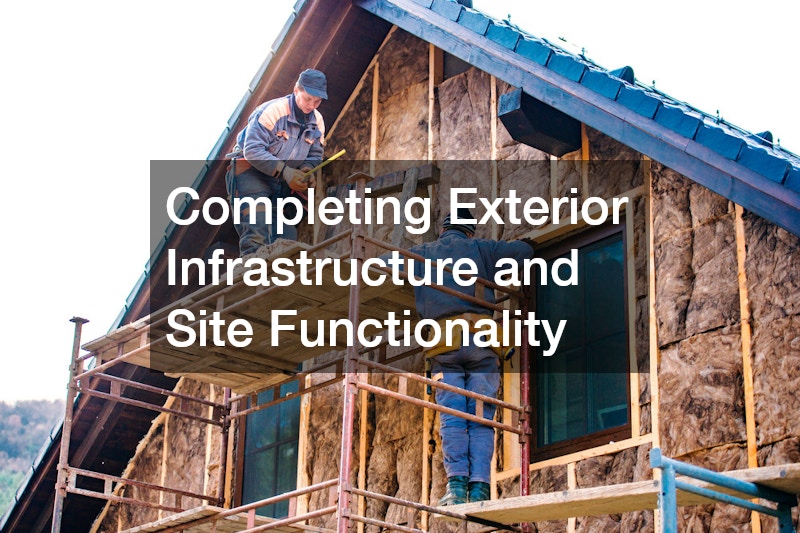
The final phase of construction focuses on exterior systems and site usability. This includes paving, traffic flow design, drainage integration, and safety markings, all of which must work together to support long-term durability and safe day-to-day operations. At this stage, even small execution errors can create long-term maintenance issues, so precision and sequencing are critical.
Commercial asphalt paving is essential for creating durable access roads, parking areas, and loading zones that can withstand constant vehicle traffic, heavy freight loads, and environmental exposure. Proper preparation of the subgrade and base layers is especially critical, as weaknesses beneath the surface can lead to premature cracking, rutting, or water infiltration. Before paving begins, the site must be carefully graded and compacted to ensure uniform load distribution. Drainage patterns should also be fully established so that water is directed away from paved surfaces, reducing long-term deterioration risks.
In addition to structural preparation, timing and environmental conditions play a major role in paving success. Temperature, moisture levels, and material handling all influence asphalt performance. Coordinating delivery schedules and equipment staging helps ensure continuous placement without cold joints or uneven compaction. Proper compaction during installation is also essential to achieve maximum density and surface stability.
Once paving is complete, line striping services are used to define traffic lanes, pedestrian pathways, loading zones, and parking spaces. This step is not just aesthetic—it directly impacts operational safety and efficiency. Clear and accurate striping improves traffic flow by guiding vehicle movement and reducing congestion in high-traffic areas. It also ensures compliance with accessibility standards, including designated parking and walkway requirements.
Before striping begins, the asphalt surface must be fully cured and cleaned to ensure proper paint adhesion. Layouts should be carefully measured and marked in advance, often using reflective guidelines or chalk templates to maintain precision. In high-traffic commercial environments, durable striping materials such as thermoplastic or epoxy coatings are often preferred for their extended lifespan and visibility.
Best practices for this phase include:
- Finalize grading and drainage before paving begins
- Stage paving in sections to allow partial site access
- Allow proper curing time before heavy vehicle traffic begins
- Use high-durability materials suited for commercial load demands
- Apply striping layouts based on operational traffic patterns
- Conduct final walkthroughs to verify safety and compliance standards
These walkthroughs are particularly important because they provide an opportunity to identify any inconsistencies in surface quality, drainage performance, or traffic flow design before the site becomes fully operational. Adjustments made at this stage are far less costly than corrections after occupancy.
This stage transforms the construction site into a fully functional commercial environment ready for occupancy and daily operations.
Conclusion
Successfully delivering complex commercial construction projects requires careful coordination across every phase of development. From early planning and leadership structure to final site finishing, each stage builds on the one before it.
Projects that prioritize communication, scheduling discipline, and specialized expertise are far more likely to stay on budget, meet deadlines, and achieve long-term performance goals. By integrating the right teams at the right time and maintaining a structured execution plan, construction teams can consistently deliver high-quality commercial facilities that meet both operational and safety expectations.